
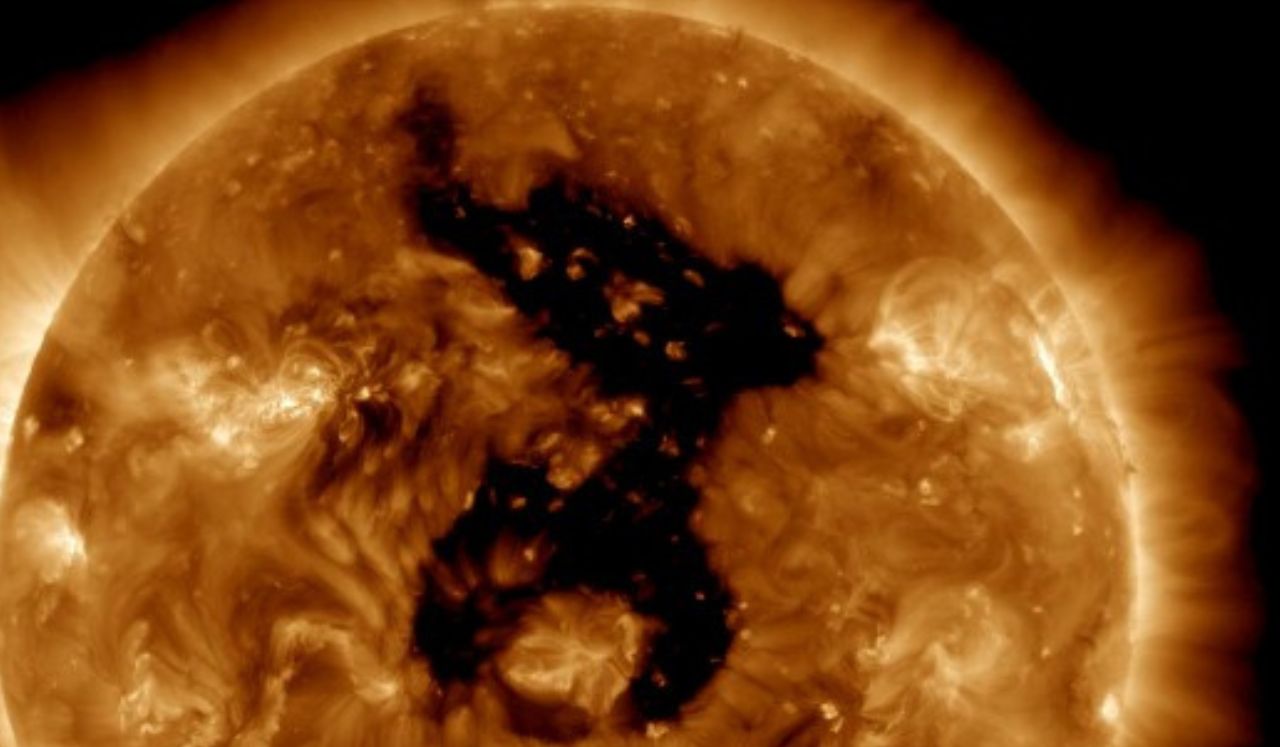
Feel like your bell got rung? So did the Earth. If you felt a bit "rough" this past weekend, you weren't imagining it. On Friday night, April 17, 2026, a massive coronal hole on the Sun released a high-speed stream of plasma that slammed into Earth's magnetic field — ringing it like a bell.
What is plasma?
The plasma exists in the Sun's atmosphere and is made of charged particles that have been there since the beginning — specifically hydrogen nuclei and free electrons that exist in a state where it is simply too hot for them to form stable atoms. These particles are physical matter from the atmosphere of the Sun, flung outward into space. When a coronal hole opens up, it acts like a high-speed nozzle, sending a stream of this plasma directly toward us. The effect isn't just theoretical; it can be seen and measured as it interacts with our magnetic field and our own atmosphere. The magnetic field lines will couple and decouple with these charged particles, causing the Earth's magnetosphere to oscillate.
What's with all the holes?
The Sun has passed the solar maximum phase and is now coasting down toward solar minimum. As this process of the solar cycle unfolds, a pole reversal follows the solar maximum period. These holes will come and go as polar reversal on the Sun happens as part of the 11-year solar cycle. The magnetic field starts to churn as the poles dance around each other while they switch positions. These magnetic distortions are what is causing these large holes in the Sun.
Solar particle blast
The graphs below show the particle density increasing Friday evening, ultimately peaking at 35.4 p/cm³ between 20:00 and 21:00 EST. Following the dense blast, the magnetic field's Bz bounced our protective magnetic field down to −14 nT early Saturday morning between 01:00 and 02:00 EST. This allowed the solar wind to couple with our magnetic field, resulting in aurora reported as far south as the Midwest US and Northern England.
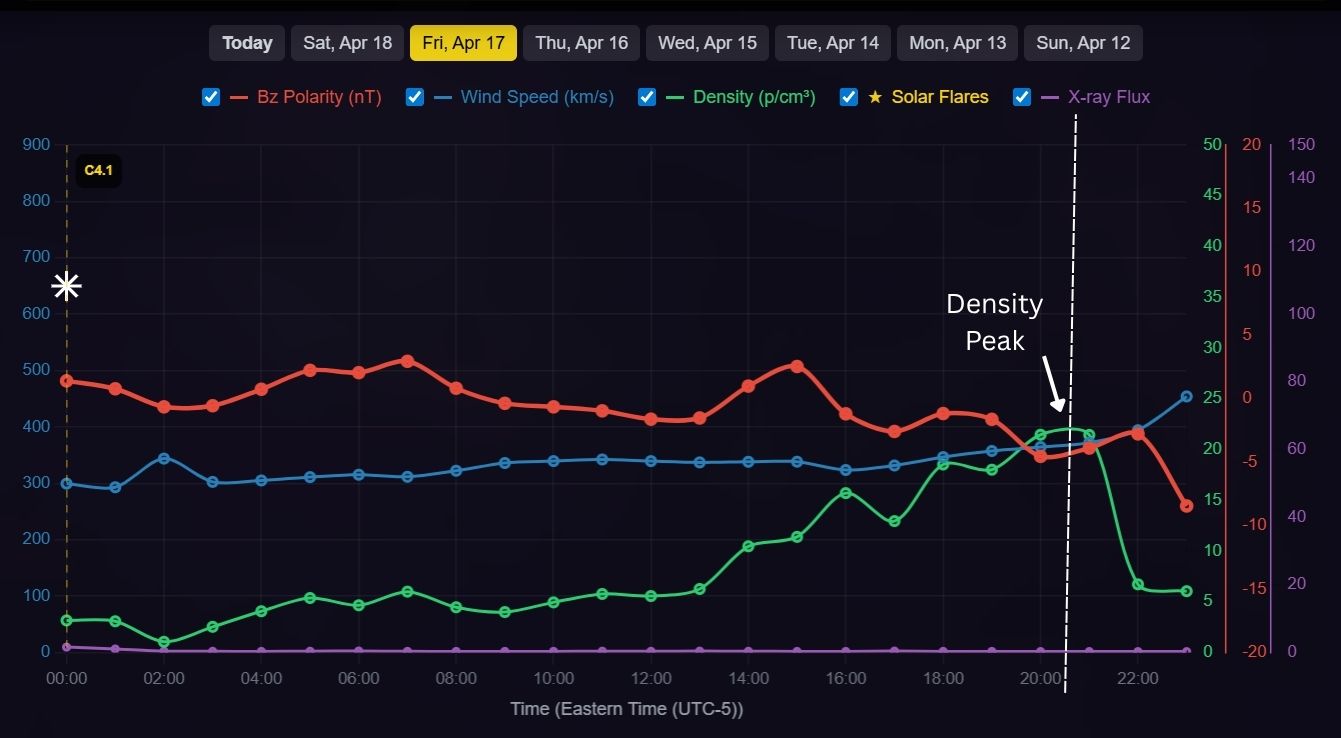
Figure 1. High-speed solar wind stream arrival (Eastern Time), April 17, 2026.
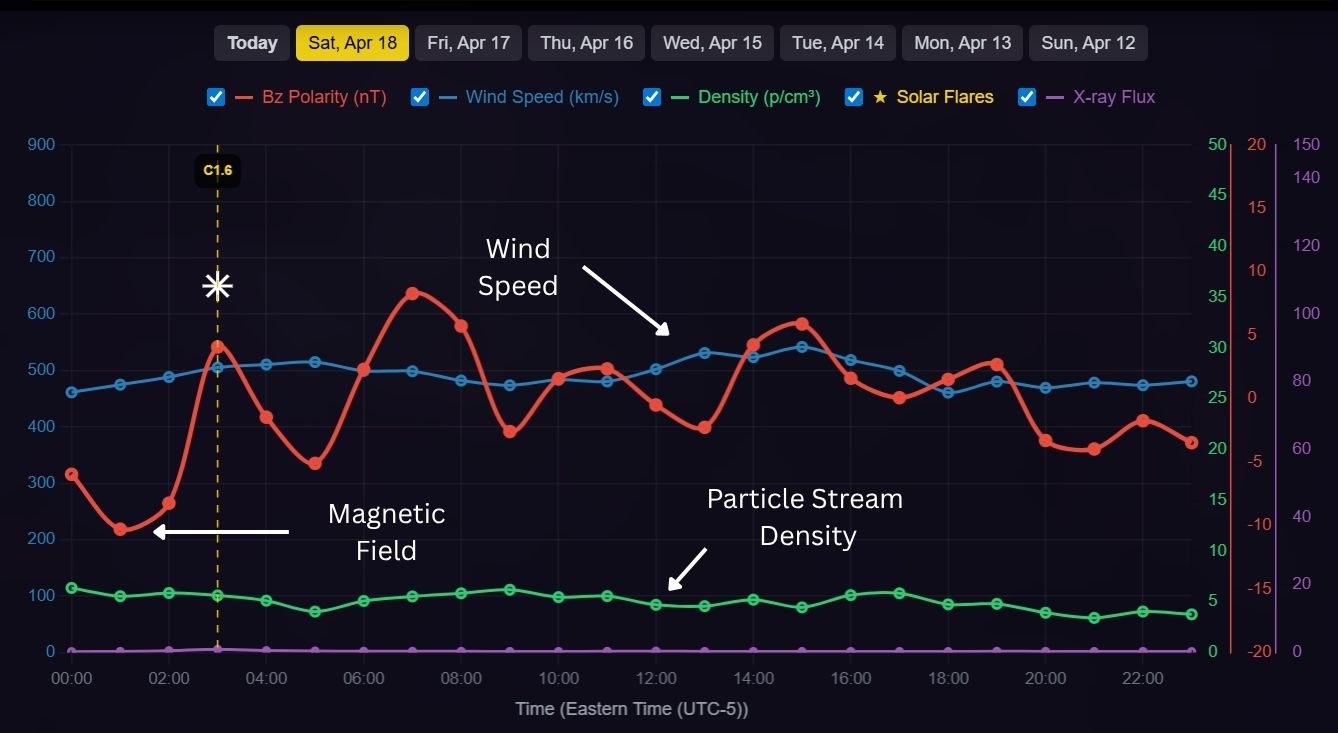
Figure 2. Magnetic field ringing like a bell on Saturday, April 18, 2026.
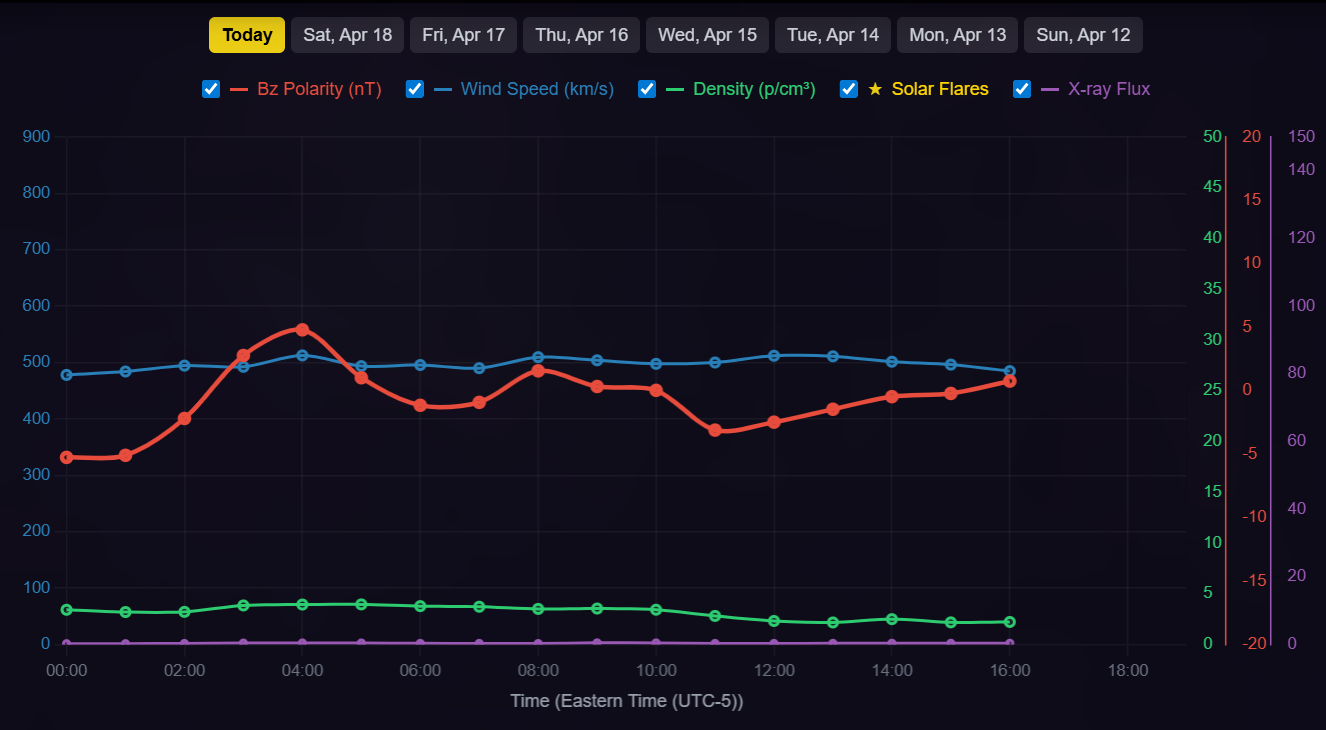
Figure 3. Sunday, April 19 — the magnetic field is still ringing until mid-day.
→ Track solar wind, Bz polarity, and density live on the Sun page.
The "nozzle" causing this disruption is visible in the satellite imagery below as a massive dark patch. This is a coronal hole — an area where the Sun's magnetic field lines have opened up, allowing solar winds to escape at speeds exceeding 500 km/s directly toward Earth.
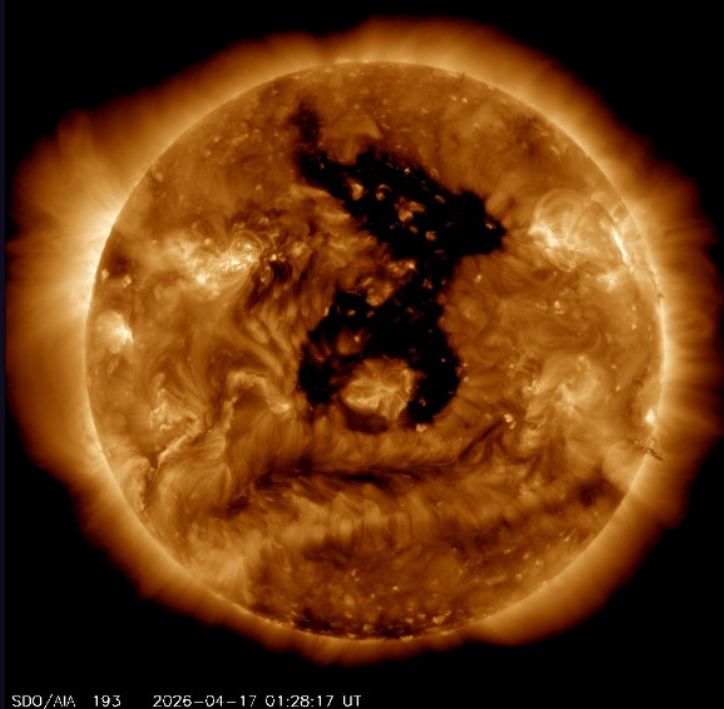
Figure 4. Satellite UV image of the Sun showing the coronal hole responsible for the blast on April 17. Image credit: NASA SDO/AIA 193Å.
→ See the live SDO 193 Å view of the Sun on the Sun page to spot the next coronal hole as it develops.
Solar particles and people
Geomagnetic storms like this have a definite impact on our modern society, affecting satellites and radio signals. There is also a physical impact. This "ringing" of the Earth's field directly impacts the Schumann Resonance — often called the Earth's heartbeat. This set of frequencies (the fundamental being 7.83 Hz) exists in the cavity between the Earth's surface and the ionosphere. Because the human nervous system is fundamentally electrical, research suggests we are sensitive to these fluctuations.
Studies have shown that during high geomagnetic activity, humans can experience changes in:
- Heart Rate Variability (HRV): a decrease in variability, indicating a physical stress response.
- Blood Pressure: fluctuations in systemic pressure as the body reacts to the electromagnetic environment.
- Brain Waves: the 7.83 Hz resonance sits right on the border of Alpha and Theta waves, which are responsible for our relaxation and dream states.
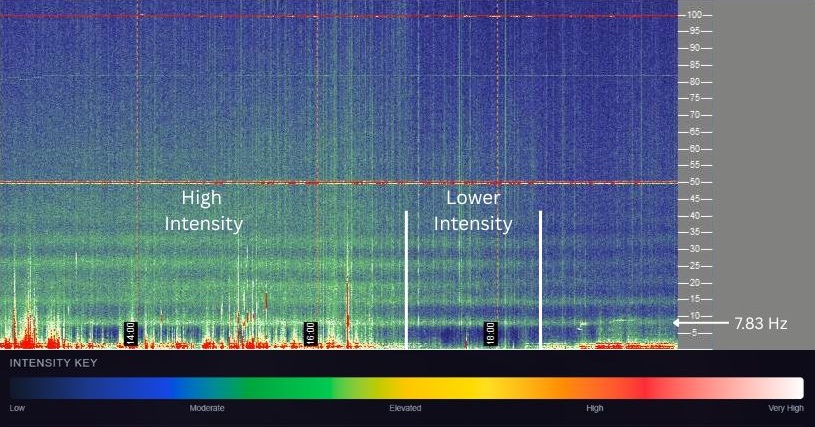
Cumiana VLF spectrogram, April 19, 2026 — Schumann Resonance harmonic bands. The fundamental 7.83 Hz line is visible near the bottom; cool blues are quiet, greens and yellows are elevated, reds and whites indicate strong activity. Image credit: vlf.it / Cumiana VLF Monitoring Station.
→ Watch the live Schumann Resonance spectrogram updating in real time.
The spectrogram above captures the Earth "ringing." Notice the horizontal bands — those are the resonance frequencies. When a solar blast hits, these lines can shift or intensify, creating the electromagnetic "noise" that our nervous systems may be picking up on. The green hue in the harmonic band indicates increased intensity.
Even though we are on the downside of the solar cycle with less solar flare intensity, there is still a very active Sun — just in a different way. It is a Sun showing us the immense power and complexity of its magnetic field, and how it can affect our lives from 150 million km away. Hopefully we will start seeing more education and awareness regarding the physical effects of solar particle blasts, to help people understand that what they might be feeling is normal and will subside. The next time you see a solar weather alert for a geomagnetic storm, remember — it is just the Sun's atmosphere reaching out to our own, and that you are quite literally being touched by the Sun.
Image and data credits
Special thanks to NASA and the NOAA Space Weather Prediction Center for the satellite imagery and solar wind data, and to frequencyforecast.com for the atmospheric frequency charts and spectrograms used in this article.
References & further reading
- Understanding Coronal Holes and High-Speed Streams — NOAA Space Weather Prediction Center.
- NASA: What is the Schumann Resonance? — Earth's Electromagnetic Heartbeat.
- The Influence of Schumann Resonance on Human Blood Pressure — PubMed Study.
- Long-Term Study of HRV Responses to Solar and Geomagnetic Changes — Scientific Reports.
- Human Responses to Geomagnetic Activity and Schumann Resonance — ResearchGate.